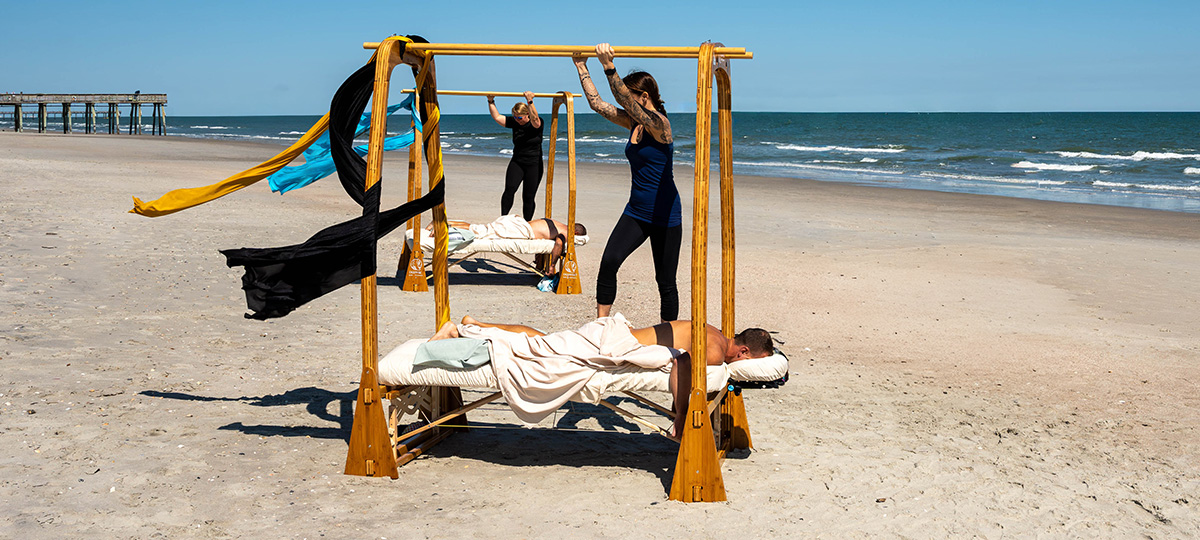
With some techniques dating back centuries and others that are more recent, Japanese massage techniques are varied in both style and the types of clients they can help. Shiatsu is probably the most well-known, at least in name, while others, such as Kobido or Seitai, are lesser known but can still provide a wealth of benefits.
Here, you’ll get a brief overview of a few of the most popular types of Japanese massage.
Ashiatsu: Using Your Feet
Despite the difference of only a single letter, ashiatsu did not directly evolove from shiatsu or vice versa. While shiatsu directly translates to “finger pressure,” ashiatsu translates to “foot pressure.”
Ashiatsu is a Western adaptation that has evolved from and blended with many ancient massage techniques found throughout Asia, including in places such as Japan, India and China.
“Ashiatsu is a form of barefoot massage dating back to the 12th century in Kerala, India,” notes Sherlyn Rose, an LMT who practices ashiatsu. “The practitioner would balance themselves by holding onto a rope overhead while they slide their foot from one end of the body to the other. This Hindu and Ayurvedic tradition of using the feet along the energy lines of the body spread to China and other parts of the Oceana continents, including Hawaii.”
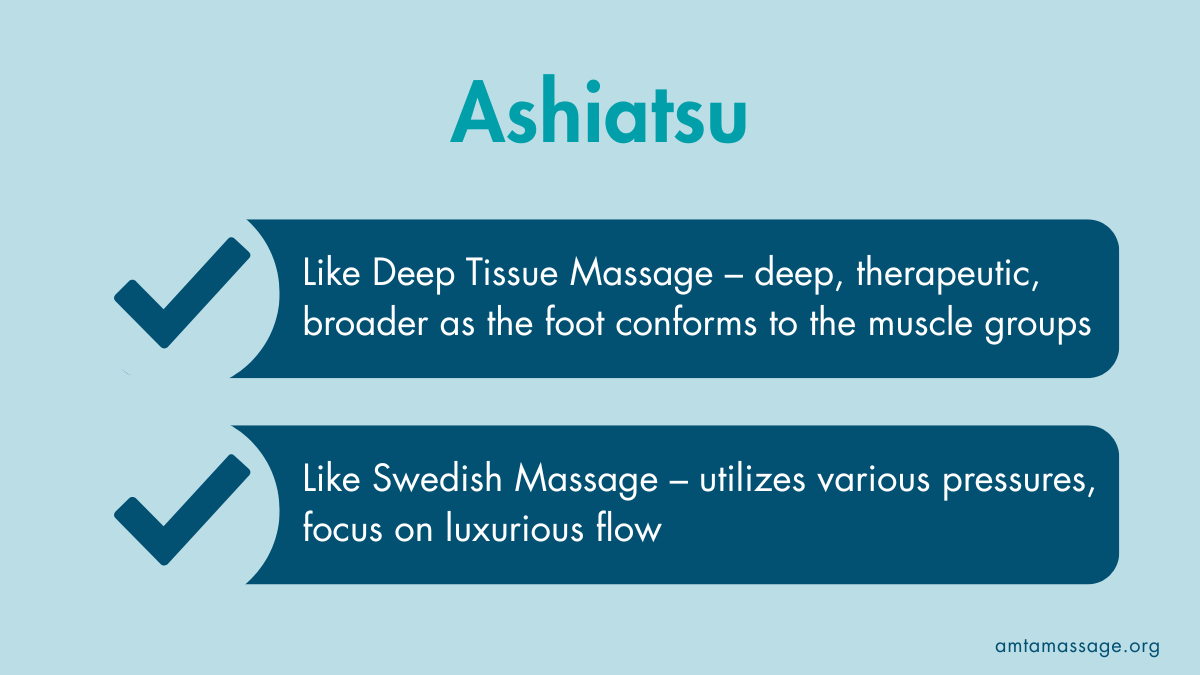
Ashiatsu is especially beneficial for clients who may be seeking a deeper pressure massage, such as athletes or those with an active lifestyle. This technique can feel akin to deep tissue massage and Swedish massage.
“Ashiatsu is like deep tissue. It can be very deep and therapeutic. It’s broader, as the foot conforms to the muscle groups,” says China Facchini, LMT, South Carolina DeepFeet Bar Therapy Instructor and Sarga Bodywork Instructor. “Ashiatsu is also like Swedish massage in that it can utilize various pressures and focus on luxurious flow. We practice effleurage, petrissage, vibration and friction with our feet.”
During a massage, a therapist controls the amount of pressure with their body position and, sometimes, with the use of parallel bars to assist with balance and leverage.
Because of the more intense pressure, a variety of contraindications exist. “There are many contraindications and precautions,” Facchini explains. “It’s important to do a thorough intake prior to the first session. Some are case by case and depend on the severity of the condition. In some instances, a doctor’s clearance may be required.”
Contraindications and special considerations include:
- People of advanced age
- People who are pregnant
- Clients with osteo conditions
- Clients managing blood disorders
- Armpits and popliteal areas, which are always contraindicated for deep pressure
Ashiatsu provides many benefits for clients, but the technique is also helpful for massage therapists who need to give their hands and body a break. "Ashiatsu doesn’t put as much wear and tear on my body as deep tissue and Swedish massage does,” Rose says. “Ashiatsu practitioners can provide the same amount of energy to the first and last clients of the day without feeling drained.”
Massage therapists who are interested in adding ashiatsu to their list of services need to remember the importance of proper hygiene and care for their feet, including:
- Monthly pedicures
- Keeping callouses and toenails trimmed and filed
- Wearing socks to keep feet soft
- Stretching to keep feet malleable
“Before putting my feet on a client every session, I make sure that my feet are warmed up using a heating pad and cleaned using antibacterial wipes,” says Rose.
Kobido: Focus on the Face
Kobido, which is sometimes referred to as the Japanese facelift and directly translates to “ancient way of beauty,” is a Japanese facial massage that uses fast, rhythmic movements to stimulate and sculpt the face, according to Renata’s Organic Skincare Spa.
The purported benefits of Kobido include anti-aging properties, improved skin hydration, improved circulation and lymphatic drainage, a natural lifting effect, and relaxed muscular tension and stress release. Facial oils and creams can be used to help enhance the benefits.

Although not specific to Kobido massage, a pilot study1 using computed tomographic (CT) technology explored the effectiveness of facial massages in relation to morphological changes, such as improvements in facial sagging.
Five healthy adults performed a self-massage twice daily for two weeks. Before and after the massages, they were given CT examinations, which were then analyzed by two radiologists on a high-accuracy imaging analysis system for massage-induced changes in the cheeks and the superficial musculoaponeurotic system (SMAS).
The radiologists found that after the facial massage, the malar top thinned and shifted cranially and horizontally while the SMAS height increased. The change in the rate in cheek thickness and SMAS height showed a significant correlation, with these changes being attributed to the lifting and tightening effects of the facial massage.
According to Renata’s, prior to a Kobido massage, the massage therapist may cleanse the face before applying a noncomedogenic oil. The massage might begin in a sitting position with stretching movements to the neck area before clients lie down and receive a stimulating massage to the face and neck with fingertips, focusing on the muscles in the face.
Massages typically last anywhere between 60 and 90 minutes, but are also offered in shorter sessions between 30 and 45 minutes.
Seitai: Teaching the Body to Restore Itself
Seitai, which translates to “balanced body,” is a Japanese bodywork practice developed by Haruchika Noguchi in the mid-20th century. Noguchi believed that when humans adapt the environment to their needs, as opposed to adapting themselves to the environment, they become weaker. Seitai focuses on restoring the body’s natural ability to rebalance and self-regulate.
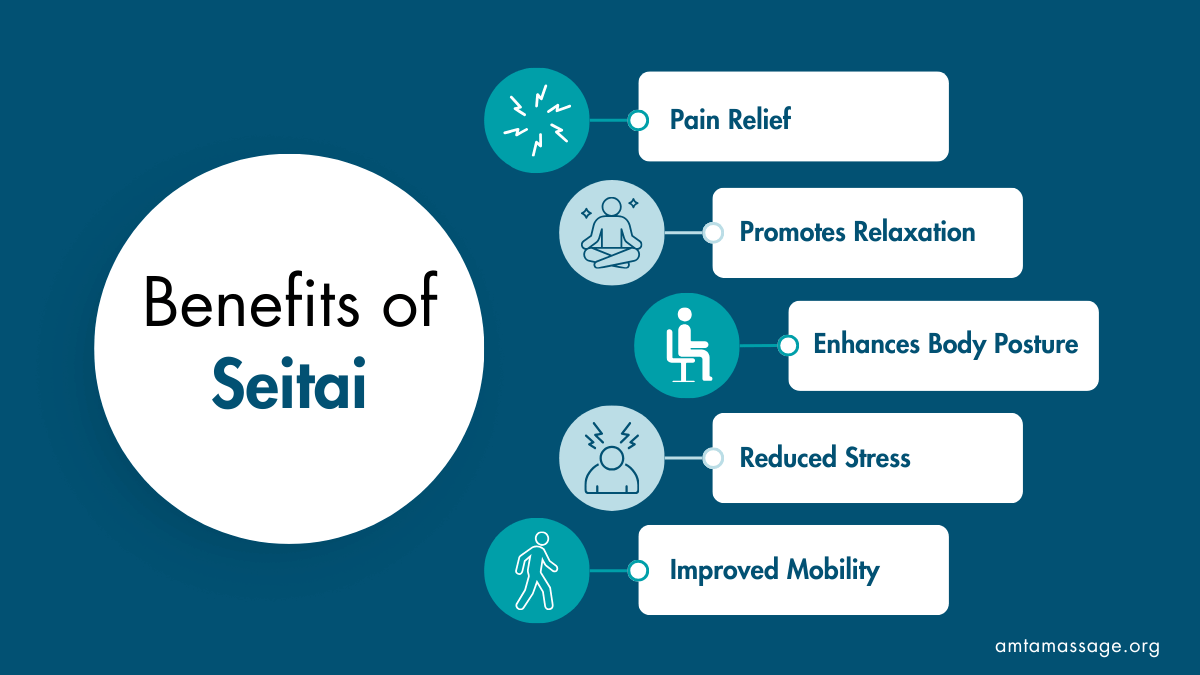
This restoration of balance and self-regulation is accomplished via pressure points, gentle manipulation and Japanese taiso stretches. Seitai can help relieve pain, reduce stress and promote relaxation, improve mobility and enhance body posture.
As is the case with virtually all types of massage, Seitai begins with a thorough intake where massage therapists talk to clients about their specific concerns, areas of discomfort and goals.
The massage session integrates Seitai pressure points, gentle manipulations, and Japanese taiso stretches meant to address areas of tension, misalignment or stagnation while also inducing relaxation.
All versions of Seitai include some version of these elements, but some slight differences between practitioners may exist, depending on how they’re trained. The Seitai stretches can be performed by clients on their own between sessions to enhance the treatment’s benefits.
Shiatsu: Restoring Balance to the Body
Shiatsu is a form of traditional Japanese bodywork that is based on restoring balance to the body. Directly translated, shiatsu means “finger pressure.” Despite being a Japanese technique, shiatsu’s roots are tied to ancient Chinese intellectual and philosophical ideas, which were introduced to Japan during the 6th and 7th centuries.
“Illness and disease are thought to result from imbalances in the natural internal flow of energy, known as Ki in Japanese or Qi in Chinese, through the body,” explains Stan Shimizu, owner of Shiatsu Sennin-so. “Shiatsu uses finger and palm pressure to restore and improve the continuity of this flow, thereby harmonizing the body, mind and spirit.”
Harmonizing this Ki or Qi is at the core of shiatsu work. A shiatsu practitioner will push, rub and stimulate specific acupressure points (called Tsubos) and energy meridians to influence the flow of Ki.
What sets shiatsu apart from other bodywork therapies is its focus on stimulating specific Tsubos and energy meridians. Shiatsu centers a holistic view of a client’s health and seeks to identify the root cause of their imbalances, Shimizu notes. It can be performed over clothing and without oils while the client is standing, sitting or lying down.
“There are variations on how pressure is applied during a shiatsu treatment,” Shimizu says. “Various kinds of pressure can be utilized, depending on the situation, the part of the body being treated and the quality of Ki/Qi present in the body. Variations include standard direct pressure, interrupted pressure, suction pressure, vibrational pressure and fluid pressure.”
During a shiatsu massage, fingers and palms are used, but the thumbs most commonly deliver the pressure. According to Shimizu, this is because:
- They are more sensitive in detecting temperature, tissue quality and Ki/Qi in different parts of the body.
- They are ideal for targeting and applying pressure to specific acupressure points.
- They can sustain and leverage the shiatsu therapist’s body weight, which can be channeled through the thumb.
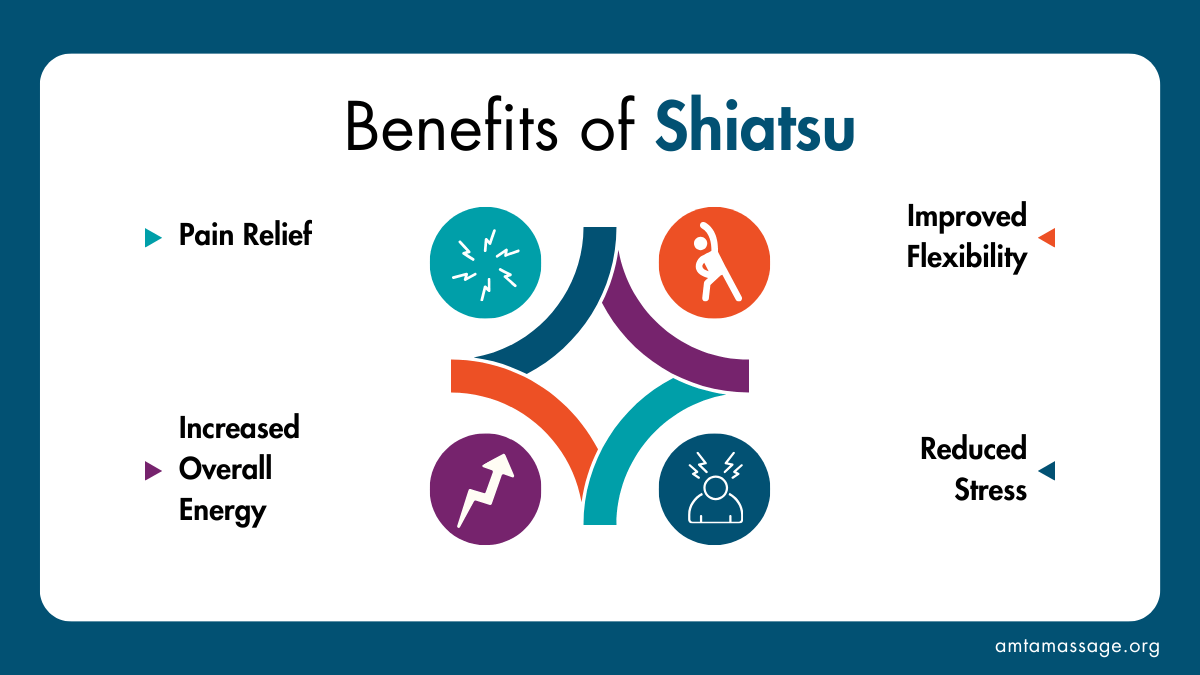
The primary benefits of shiatsu include pain relief, improved flexibility, reduced stress and increased overall energy. However, despite reduced stress being a benefit, shiatsu is not a type of relaxation treatment. “It is a therapeutic treatment and more medically and holistically focused. Another misconception is that shiatsu must be very painful to be effective,” Shimizu says.
A study2 conducted on 80 nulliparous pregnant women examined the impact of shiatsu massage on labor pain and anxiety. The study split the women into two groups (control and intervention) of 40. The intervention group received shiatsu massages from certified midwives. Their pain was then assessed using the Numeric Rating Scale, and anxiety was assessed using the Hamilton Anxiety Rating Score.
The study found that the intervention group showed significant reduction in labor pain scores while the control group showed an increase. Anxiety scores in the intervention group also decreased compared to the increase seen in the control group.
Researchers concluded that shiatsu massage was effective and safe for relieving pain and reducing anxiety during childbirth, suggesting that shiatsu massage can be used as an effective alternative method to relieve pain and anxiety during labor in low-risk pregnancies.
Zen Shiatsu: Integrating Mind and Body
Shizuto Masunaga developed Zen shiatsu in the 1970s. Zen shiatsu incorporates Zen Buddhist principles and psychology, and is a direct evolution from shiatsu.
“Masunaga graduated with a degree in psychology and also became a professor of psychology,” says Shimizu. “He also studied Zen Buddhism, which influenced his belief in the interconnections between body, mind and spirit. More traditional shiatsu focuses specifically on the anatomical and physiological aspects of the body and does not consider the mind or spirit.”
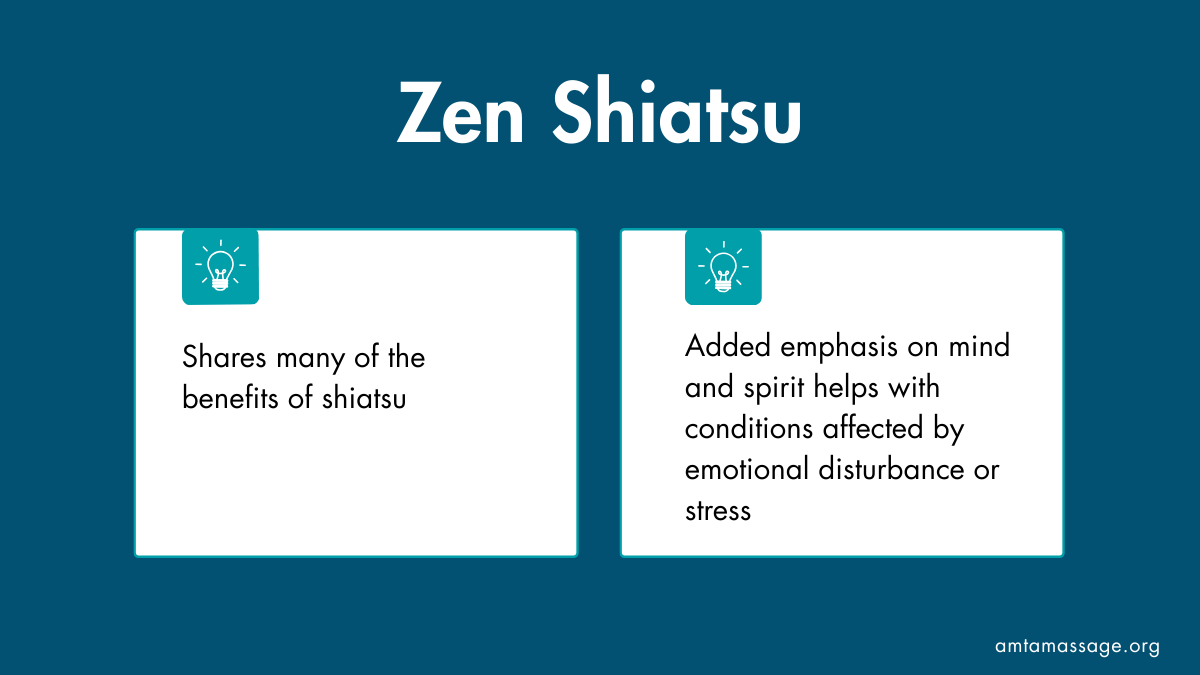
Zen shiatsu shares many of the same benefits as shiatsu, but due to the added emphasis on mind and spirit, Zen shiatsu is especially beneficial and effective in helping with conditions where emotional disturbance or stress is an underlying factor, according to Zen Shiatsu Chicago.
The most common of these include:
- Insomnia
- Anxiety and depression
- Muscular tension
- Headaches
- Digestive disturbances
- Menstrual disturbances
- Lower resistance to infection
“Zen shiatsu is a hands-on method used to help with pain, injury and stress relief, like massage. Additionally, it is helpful for people’s internal health issues, such as problems with digestion, elimination, sleep, immunity or various chronic illnesses,” says Steve Rogne, director of Zen Shiatsu Chicago.
A longitudinal case study3 measured Zen shiatsu’s effect on stress reduction in a child with autism spectrum disorder. The seven-year-old male was given a 20-minute Zen shiatsu massage weekly for six consecutive weeks. Stress was measured using a five-point stress scale designed for children with autism to indicate the client’s stress level before and after each session.
The study found that based on the five-point pictorial stress scale, the child’s overall quality of life improved within the six weeks of receiving Zen shiatsu, offering preliminary evidence for the possibility of Zen shiatsu providing a viable integrative therapy for alleviating stress in children with autism.
“The process of Zen shiatsu feels very affirming, in that it feels like it is directly responding to the unfolding needs of the individual. This makes it extremely well-suited to working with those with a history of trauma,” Rogne says. “Because our work has no preset agenda and only works with the body’s inherent momentum, it does not set up any dynamic of force-on-force, or attempting to take the client’s body somewhere it is not ready to go. Instead, by concentrating our senses, we can follow and support the exact amount of healthy change the client is ready to make.”
During a first session, extra time may be given to client intake to reaffirm their goals. The session will then comprise work directly on the muscles, alternated with relaxing stretches and movements applied to the client’s body to benefit joint health and fluid flow.
“Both verbally and through our sense of touch, we determine the exact healthy change that the client’s body is trying to make, and we monitor the effectiveness of our treatment based on whether that change is happening or not” says Rogne. “We use our senses to feel for the most effective places to stop and stay, where the client’s body does the healing on its own. Zen shiatsu is as deep or light as needed for any individual, and our clients include those who can be easily overstimulated and need a relatively light depth of contact, as well as those whose bodies respond best at a deep level of contact. Our highly refined senses help us to exactly calibrate those needs.”