Diving Deeper Into Assisted Stretch: What It Is and What to Know as a Practitioner and Consumer
November 18, 2026
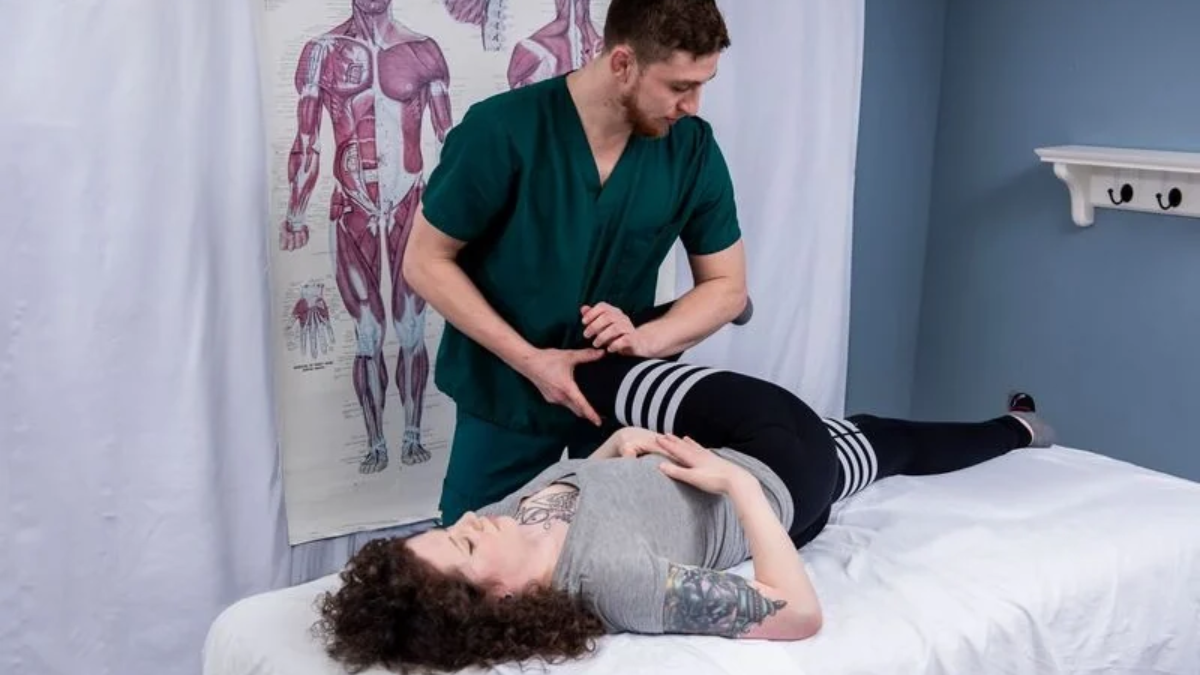
As consumers increasingly prioritize stretching as a part of their wellness routines and stretch-focused studios continue to open across the country, many massage therapists are asking whether assisted stretch has a place in their practices.
To help answer that question, we spoke with Noel Poff, LMT, and Mark Capriotti, LMT, BCTMB, about what assisted stretch is, the benefits and contraindications, and what both practitioners and clients should know before incorporating it into a treatment plan.
Explore Noel's Integrative Stretch Continuing Education Course
What Is Assisted Stretch?
Assisted stretch is a hands-on modality where a trained practitioner guides a client through specific stretches to improve flexibility, mobility, range of motion, and overall movement quality.
Unlike stretching on your own, assisted stretch is a collaborative process between practitioner and client. The therapist uses their knowledge of anatomy and movement to provide support, stability, guidance, or resistance while helping the client move through various positions and ranges of motion.
When asked to describe the technique, both Noel and Mark emphasize that: “assisted is the important word.”
Noel explains,
The practitioner's role is to facilitate the stretch by providing support, stability, or resistance.
Depending on the client's goals and needs, practitioners may incorporate a variety of stretching methods, including passive stretching, active stretching, isolated stretching, and proprioceptive neuromuscular facilitation (PNF).
Learn more about massage and isolated stretch therapy
Throughout the session, practitioner and client work together, exploring movement patterns and evaluating the sensations they produce. Because client feedback is essential, assisted stretch is often more interactive than many people expect.
Mark also notes that the assistance must come from another person. While stretching devices, straps, and machines can be useful tools, they do not replace the hands-on assessment, communication, and adaptability that characterize assisted stretch.
How Assisted Stretch Can Complement Massage Therapy
For massage therapists, assisted stretch can be a natural extension of the work they are already doing. While massage therapy focuses on addressing soft tissue restrictions, reducing tension, and promoting relaxation, assisted stretch helps clients actively explore and maintain movement within those tissues and joints.
Together, the two approaches can support improved mobility, body awareness, and functional movement. For example, massage may help reduce muscular guarding and tissue tension, making stretching more comfortable and effective. Likewise, assisted stretching can help reinforce the gains achieved during massage by encouraging clients to move through newly accessible ranges of motion. Rather than serving as competing services, massage therapy and assisted stretch can often work best as complementary tools within a comprehensive wellness or recovery plan.
How Does It Fit Into Your Massage Therapy Practice?
For both Noel and Mark, a passion for sports and athletics led them to assisted stretch. The technique combines elements of wellness, fitness, and movement education, making it a natural fit for practitioners who enjoy helping clients improve performance and mobility.
Although assisted stretch is widely used by athletic populations, from high school teams to professional sports organizations, its applications extend far beyond sports. People of all ages and activity levels may benefit, including adolescents, office workers, active older adults, and geriatric populations.
As a result, assisted stretch may have a place in many massage therapy practices, particularly for clients seeking improved mobility, movement efficiency, or support in reaching fitness and lifestyle goals.
What Are the Benefits and Contraindications?
Like any therapeutic approach, assisted stretch should be applied with a clear understanding of both its potential benefits and its contraindications.
According to Noel, clients may experience improvements in range of motion, increased comfort in their bodies, and more efficient movement patterns that contribute to fewer aches and pains.
Mark adds that one of the greatest advantages of assisted stretch is the practitioner's ability to guide the body into specific positions that clients may not be able to access independently. Through a strong understanding of anatomy and biomechanics, practitioners can target particular muscle groups and movement patterns to support athletic, occupational, or lifestyle goals.
As Mark puts it:
With the right practitioner doing the right stretch at the right time, the opportunities are limitless.
At the same time, practitioners should carefully consider contraindications. Injury, hypermobility, recent surgery, acute inflammation, and recent accidents are all factors that may affect whether stretching is appropriate and how it should be performed.
A thorough intake process is essential to determine which techniques, if any, are suitable for a particular client. Ongoing communication during the session is equally important, allowing the practitioner to modify stretches based on the client's comfort and response.
What Should Practitioners Know Before Incorporating Assisted Stretch Into Their Practices?
Much like massage therapy, it is important that practitioners adjust their approach to each client. Noel and Mark emphasize that success depends less on memorizing techniques and more on understanding when and why to use them.
The challenge is not simply knowing how to perform a stretch. It is knowing which stretch is appropriate for a particular client, at a particular time, and for a particular goal.
Because assisted stretch is highly collaborative, practitioners should be prepared to engage clients in conversation throughout the session. This dialogue helps determine appropriate intensity, range, and progression while ensuring that the client remains an active participant in the process.
Mark also encourages practitioners to understand the neurological component of stretching:
“We are not looking to accomplish something on the mechanical side. We are actually looking to create neuromuscular responses in the body. We are teaching the body that it is safe to take the muscle a little further. Through facilitation, the body learns that it is safe, increasing thresholds by building neural pathways. This allows the body to become more pliable and for long-term change to occur in the muscle. We first need to go through a series of processes to warm up the muscles so that we can bring down the body’s natural defense mechanism.”
Having a clear understanding of the purpose of assisted stretch, and sharing that information with clients, will set a strong foundation for a positive, effective session.
Finally, both practitioners stress the importance of continuing education. A strong understanding of anatomy, biomechanics, and movement assessment is essential, and ongoing learning allows practitioners to better serve their clients.
As Noel puts it, "the more you know, the better."
What Should Clients Know Beforehand?
One of the biggest misconceptions about assisted stretch is that clients can simply lie back and receive treatment passively. Assisted stretch involves teamwork and is it most effective when clients actively participate in the process.
That’s why ongoing communication is essential. Clients should let the practitioner know if a stretch feels painful, uncomfortable, or ineffective. Even small adjustments in positioning or intensity can significantly change the experience and outcome.
Clients should also remember that the session should not be viewed as a competition.
As Noel explains, "stretching is not a performance."
Both Noel and Mark emphasize that forcing the body beyond its current capacity can be counterproductive. Rather than chasing a particular range of motion, clients and practitioners should focus on finding appropriate, comfortable limits and adjusting as needed throughout the session.
Over time, clients may become more attuned to their bodies and more involved in directing the session. Mark describes this as a "synergy" that develops through trust, communication, and a shared understanding of the client's goals that he finds very rewarding.
He also encourages clients to ask questions, including about a practitioner's training, credentials, and rationale for specific stretches. Most qualified practitioners are happy to explain their approach, and these conversations can help build trust while ensuring both client and practitioner remain aligned throughout the session.
Related Resources
CE Course: Integrative Stretching Foundations For Your Massage Practice
Learn how to incorporate stretch into massage sessions to help improve clients’ functional ranges of motion by taking Noel Poff's CE course.
Massage for Athletic Performance
Explore recent research highlighting how massage can help improve performance and flexibility, reduce muscle soreness and inflammation, and help individuals stay focused on training.