Types of Stretching
There are several different types of stretching techniques massage therapists can incorporate depending on the client’s goals, condition, tolerance level and overall treatment plan. Understanding the differences between each type of stretch allows therapists to choose the most appropriate approach for each client instead of using a one-size-fits-all method.
Ballistic stretching. Ballistic stretching uses repetitive bouncing or swinging movements to push a muscle beyond its normal range of motion. This style of stretching is commonly seen in sports conditioning or athletic warm-ups.
Although ballistic stretching may help improve mobility and dynamic flexibility for athletes, it must be performed carefully. Quick bouncing movements can trigger the stretch reflex, causing the muscle to contract instead of relax. If performed too aggressively, you risk a strain or injury.
For most massage therapy clients, especially desk workers or individuals with chronic tension patterns, ballistic stretching is typically not going to be the first or best choice.
Static stretching. Static stretching is one of the most commonly used stretching methods in massage therapy and recovery settings. This technique involves slowly moving a muscle into a position of mild tension and holding the stretch for a period of time.
Static stretching is beneficial because it allows the nervous system time to relax while encouraging tissue lengthening and improved mobility. This type of stretching is especially effective for clients experiencing chronic tightness from prolonged sitting, poor posture or repetitive movements.
For desk workers, static stretching can be extremely beneficial for the upper trapezius, pectorals, levator scapulae, forearms and thoracic region.
Active stretching. Active stretching occurs when the client uses their own muscular effort to create the stretch without outside assistance. In this form of stretching, one muscle group contracts while the opposite muscle group lengthens.
Active stretching helps improve:
- Neuromuscular control
- Body awareness
- Functional mobility
- Circulation
- Muscular activation
This type of stretching is especially helpful before movement or exercise because it prepares the body for activity while improving mobility at the same time.
Examples of active stretches commonly used for upper body dysfunction include:
- Upper trapezius stretches
- Rhomboid stretches
- Cervical mobility stretches
- Side bending stretches for the obliques
- Chest opening movements
Many desk workers benefit from active stretching because it teaches them how to move better on their own and outside of or in-between massage sessions.
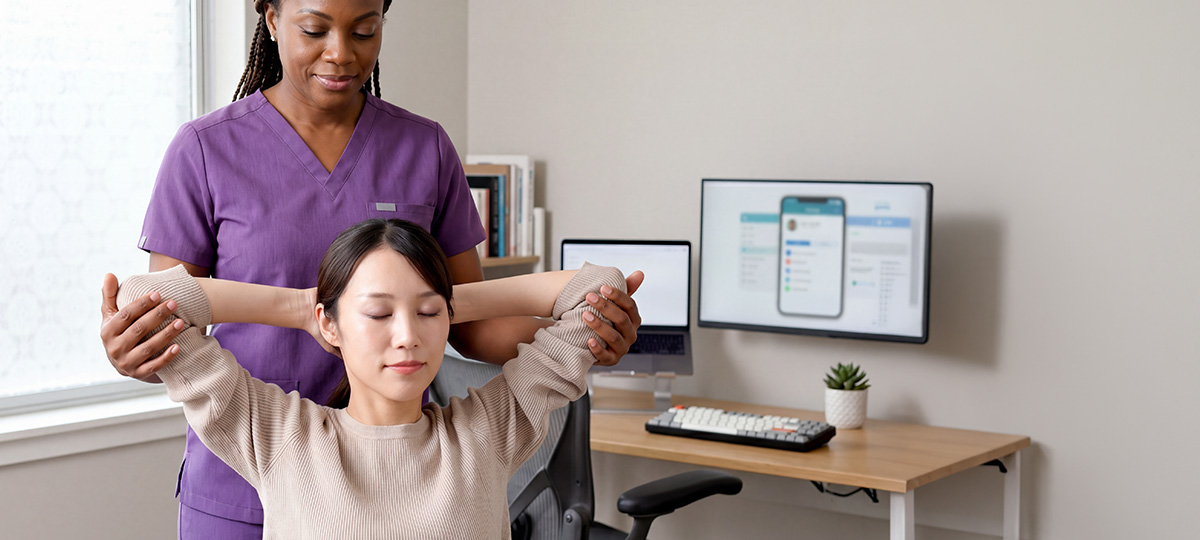
Active-assisted stretching. Active-assisted stretching combines client participation with an external force, such as a therapist, stretching strap, towel, foam roller or mobility tool.
This method allows clients to maintain some muscular control while still receiving assistance to improve range of motion. Active-assisted stretching is often well tolerated because the client remains actively engaged during the process.
Massage therapists should avoid forcing movement or overstretching tissues during active-assisted stretching. The goal is controlled mobility, not excessive flexibility.
Passive stretching. Passive stretching occurs when an outside force creates the stretch while the client remains relaxed. In massage therapy sessions, this is often performed with the client lying comfortably on the table while the therapist moves the limb or body part through a controlled range of motion.
Passive stretching can be extremely relaxing for clients with chronic neck and shoulder tension, postural dysfunction, stress-related tightness and limited mobility.
For desk workers specifically, passive stretching can help decrease guarding patterns created by prolonged sitting and repetitive computer use.
Proprioceptive Neuromuscular Facilitation (PNF). Proprioceptive Neuromuscular Facilitation, commonly referred to as PNF stretching, is one of the most effective techniques for improving flexibility and range of motion. PNF combines stretching with muscular contractions to improve neuromuscular communication and tissue extensibility.
Common forms of PNF include:
- Contract-Relax (CR)
- Antagonist Contract
- Contract-Relax-Antagonist-Contract
During a CR stretch, for example, the therapist first passively stretches the target muscle. The client then performs an isometric contraction against resistance for several seconds before relaxing deeper into the stretch.
PNF stretching can be highly effective for athletes, clients with chronic tightness, postural dysfunction and restricted shoulder mobility.
Upper Body Applications for Desk Workers
Upper body stretching is especially valuable in today’s population, where many people find themselves sitting for prolonged periods of time and using technology that reinforces repetitive patterns. Many desk workers spend eight or more hours daily in positions that encourage rounded shoulders, forward head posture, thoracic stiffness, and muscular imbalances throughout the neck and upper extremities.
Over time, these patterns can contribute to:
- Neck pain
- Shoulder impingement
- Tension headaches
- Wrist discomfort
- Decreased mobility
- Poor breathing mechanics
- Postural fatigue
Some of the most beneficial upper body stretches for desk workers include:
- Upper trapezius stretches
- Levator scapulae stretches
- Pectoral stretches
- Posterior shoulder stretches
- Latissimus dorsi stretches
- Wrist flexor and extensor stretches
- Cervical mobility stretches
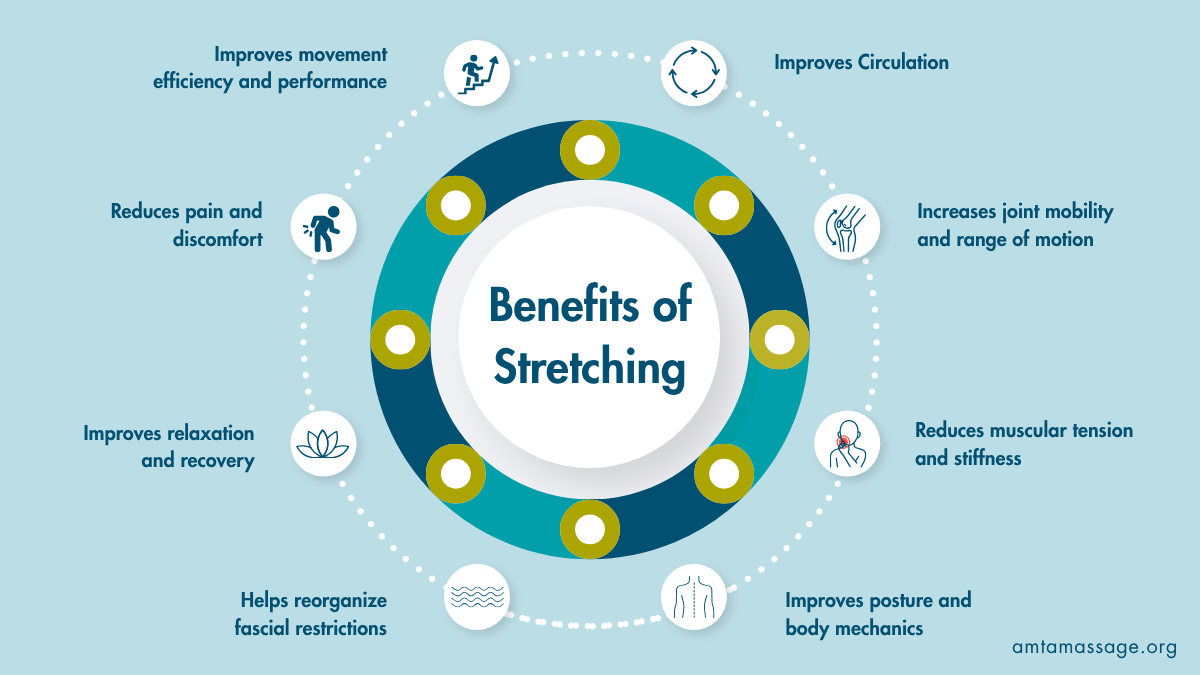
These techniques may help improve posture, circulation, shoulder mobility, breathing mechanics and overall comfort during daily activities.
When working with clients, therapists should focus not only on flexibility, but also on movement quality, stabilization, breathing patterns and posture awareness. Stability should always come before mobility.
Safety and Clinical Considerations
Before beginning any stretching program, massage therapists should evaluate the client’s mobility and comfort level, as well as look for any conditions that might contraindicate including stretching in the session.
Therapists should:
- Avoid painful stretching
- Encourage relaxed breathing
- Stabilize joints properly
- Progress gradually
- Modify techniques for injuries or hypermobility
Stretching should feel controlled and supportive, not forced or aggressive.
Stretch therapy continues to grow in popularity because clients want to move better, feel better, and reduce the physical stress created by daily life and prolonged sitting.
When combined with anatomical knowledge and intentional movement principles, isolated stretch therapy becomes more than flexibility work. It becomes a therapeutic tool that can improve posture, mobility, recovery and overall quality of life for your clients.
For desk workers especially, upper body stretching can help reduce tension patterns associated with prolonged sitting, technology use and repetitive movements. By incorporating intentional stretching techniques into massage sessions, massage therapists can help clients improve movement quality, decrease discomfort and restore better balance throughout the body.