Continuing Education
Massage Therapy Research CE
Research literacy helps you market your massage practice to clients and health care professionals.
More research is starting to show that massage can be an effective nonpharmacological intervention for some common respiratory challenges.
August 1, 2026
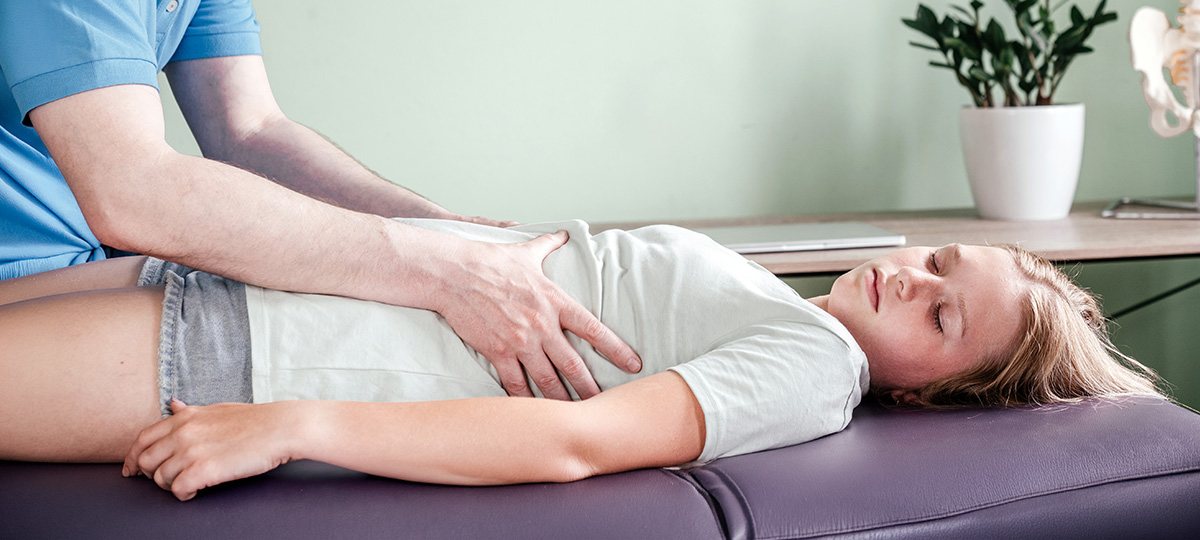
Chronic conditions like COPD and asthma can drastically change how a person lives their life, sometimes severely limiting a person’s ability to take part in everyday activities. With the growth of interest in integrative approaches to health and well-being, more research is starting to show that massage can be an effective nonpharmacological intervention for some common respiratory challenges.
Researchers wondered about the effects of deep tissue massage on respiratory parameters in healthy people, specifically how deep tissue massage based in deep palpation and reduction of fascial restrictions may reduce symptoms resulting from fascial disorders.
This pilot study comprised 40 participants divided into two subgroups. The experimental group were given a single deep tissue massage session. Classic massage was used on participants in the control group.
Before and after each session, chest circumference and oxygen saturation were measured and a spirometry test was performed.
Although chest expandability significantly improved in both groups, greater effect was achieved in the deep tissue massage group. Vital capacity and saturation significantly increased in the experimental group. No significant changes in dynamic parameters were noticed in the control group.
“In this study, deep tissue massage appeared to improve chest expandability and vital capacity with simultaneous decrease in FVC in healthy subjects,” researchers noted.
Deep tissue massage appeared to improve chest expandability and vital capacity.
This 2025 systematic review and network meta-analysis explored the efficacy of nonpharmacological interventions for childhood asthma.
Researchers searched seven English and Chinese databases from inception to April 1, 2025 for randomized controlled trials related to nonpharmacological interventions for childhood asthma.
A total of 41 studies comprising 3,164 participants were included, and involved diverse interventions like structured exercise programs, controlled breathing techniques, traditional moxibustion therapy, psychological interventions and traditional therapeutic massage.
Outcome indicators focused on include FEV1, FVC, PEF, PAQLQ and FeNO.
Researchers concluded five of the nonpharmacological interventions showed consistent efficacy across all modalities in alleviating asthma symptoms, with psychological interventions emerging as the optimal adjunctive therapy for improving FEV1 and exercise therapy having the greatest therapeutic effect on FVC.
“Massage therapy demonstrated superior efficacy in enhancing PEF, PAQLQ scores and FeNO levels,” researchers noted.
1. Trybulec B, Macul B, Koscinska K, Nawrot-Porabka K, Barlowska M, Jagielski P. “The effect of deep tissue massage on respiratory parameters in health subjects-A non-randomized pilot study.” Heliyon. 2023 Apr 5;9(4).
2. Zhang J, Ye Z, Guo F, Ye Y, Yu X, Song Z, Zhang F, Gu N, Ao M, Liu Q. “Efficacy of non-pharmacological interventions for childhood asthma: a systematic review and network meta-analysis.” BMC Pediatr. 2025 Nov 12;25(1):927.