Continuing Education
Massage Therapy Research CE
Research literacy helps you market your massage practice to clients and health care professionals.
Athletes have been using massage therapy for a long time, whether to help recover from injury, warm up for events or cool down. Research continues to support the benefits of massage for a variety of outcomes.
May 1, 2026
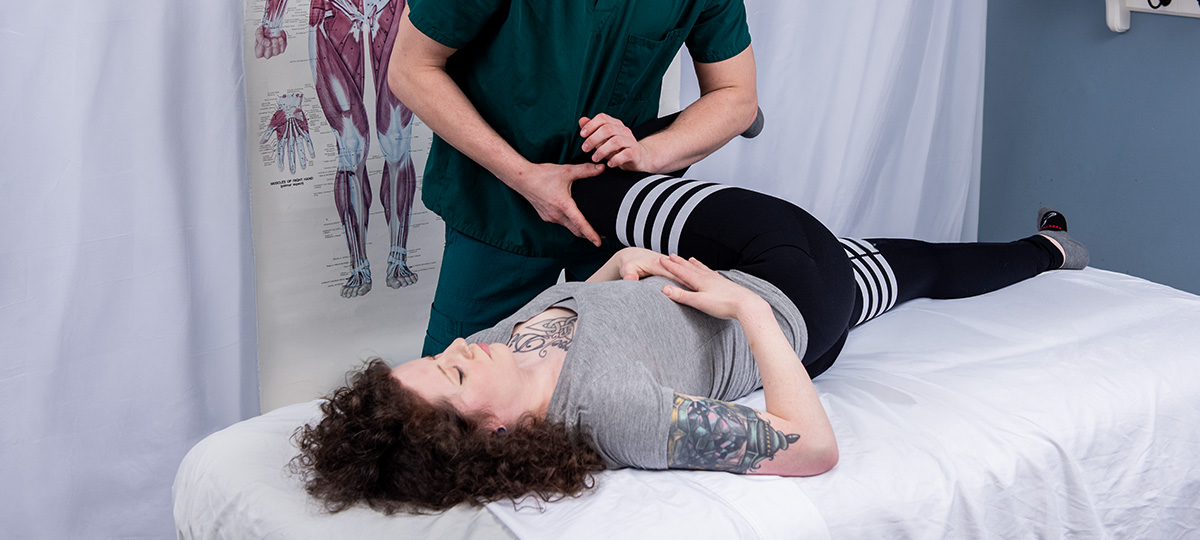
Researchers wondered about the effects of sports massage, blood flow restriction (BFR) and cold therapy on quadriceps recovery in mixed martial arts (MMA) athletes following eccentric exercise, focusing on muscle biomechanical properties, pain and strength.
This randomized, single-blind clinical trial comprised 36 men and women MMA-trained participants who were divided into three groups: massage, BFR and cooling, and a control. Each group had 12 participants.
To fatigue the muscles, each MMA participant performed five sets of plyometric jumps on a 50-centimeter box until exhaustion, with one-minute breaks between sets.
Participants in the massage group then received a 20-minute massage using standard techniques. The BFR and cooling participants underwent a 20-minute alternating blood flow restriction and cooling treatment with ice bags on the quadriceps. The control group rested passively with no intervention.
Assessments were done four times before exercise, immediately after exercise, 24 hours after exercise and 48 hours post-exercise. Perfusion unit, muscle elasticity, pressure pain threshold, reactive strength index and total quality recovery were all measured.
Statistical analysis showed both massage and BFR and cooling had significant effects. Post exercise 48-hour values for all four assessment measurements were significantly improved in both groups when compared to the control.
“The study concludes that both massage and combined blood flow restriction with cooling interventions significantly enhance post-exercise recovery-improving muscle profusion, elasticity, reactive strength and perceived recovery compared to passive rest,” researchers noted.
This 2025 randomized controlled crossover design study examined the effects of percussion massage and foam rolling on hamstring flexibility, reactive and explosive strength muscle performance, and muscle fatigue.
A total of 18 physically active university student participants all underwent three activities: percussion massage, foam rolling and a control. Each activity was separated by a four- to five-day washout.
Assessments to measure flexibility were performed via the active knee extension test. A single-leg reactive strength test and leg press explosive strength test assessed muscle performance, and a 30-s side hop test measured endurance and fatigue. Statistical analyses included repeated measures ANOVA and non-parametric tests where appropriate.
Percussion massage significantly improved hamstring flexibility, though no significant flexibility differences were found with foam rolling or the control. No significant effects of any intervention were observed on reactive strength index, leg press power or hop test performance.
“Percussion massage provides an immediate enhancement in hamstring flexibility superior to both foam rolling and no treatment,” researchers noted. “These findings suggest that percussion massage may be an effective pre-activity tool for improving flexibility.”
Massage Therapy Research CE
Research literacy helps you market your massage practice to clients and health care professionals.
Research Trends
Read AMTA's most recent press releases, focused on the latest research highlighting how massage therapy can improve health and well-being.
1. Trybulski R, Roczniok R, Olaniszyn G, Svyshch Y, Vovkanych A, Wilk M. “Sports massage and blood flow restriction combined with cold therapy accelerate muscle recovery after fatigue in mixed martial arts athletes: a randomized controlled trial.” J Funct Morphol Kinesiol. 2025 May 28;10(2):194.
2. Bartik P, Pacholek M. “Acute effect of percussion and foam roller massage on flexibility, reactive and explosive strength, and muscular endurance in young adult males: a crossover pilot study.” Peer J. 2025 Oct 30:13.