Massage therapists are athletes of empathy.
You spend your days focused on your clients’ well-being. But you also need to make sure you’re taking care of yourself.
Following are some quick recovery tips you can use in-between clients or after a long day that leaves you feeling like you’re running on empty.
Reset the Breath + Ground Yourself
Time needed: 0–2 minutes
- Grounding breath: Sit or stand tall. Inhale through your nose for four counts, expanding your belly. Exhale slowly through your mouth for six counts, softening your shoulders. Repeat five times.
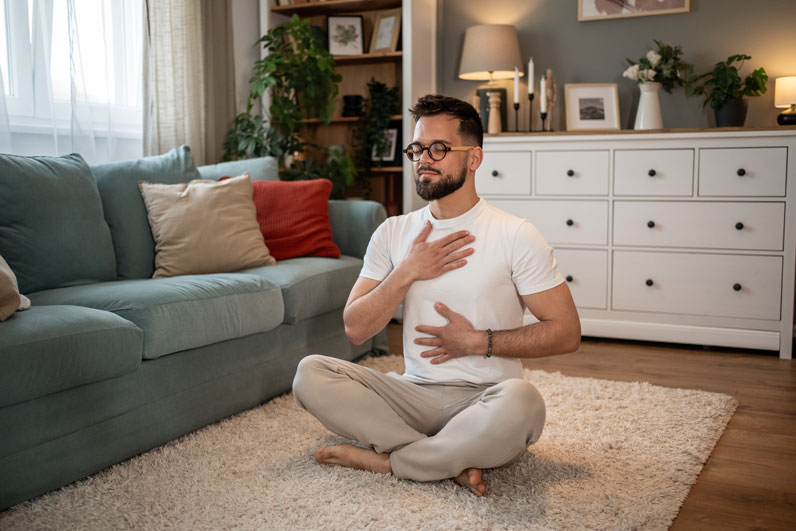
- Wash the day or massage session off visualization: As you exhale, imagine releasing any tension or emotional residue from any massage session or day—picture it flowing out with your breath or washing off your hands.
Hand and Forearm Release
Time needed: 3 minutes
- Wrist circles: Interlace your fingers, make slow figure-eights with your wrists for 30 seconds each direction.
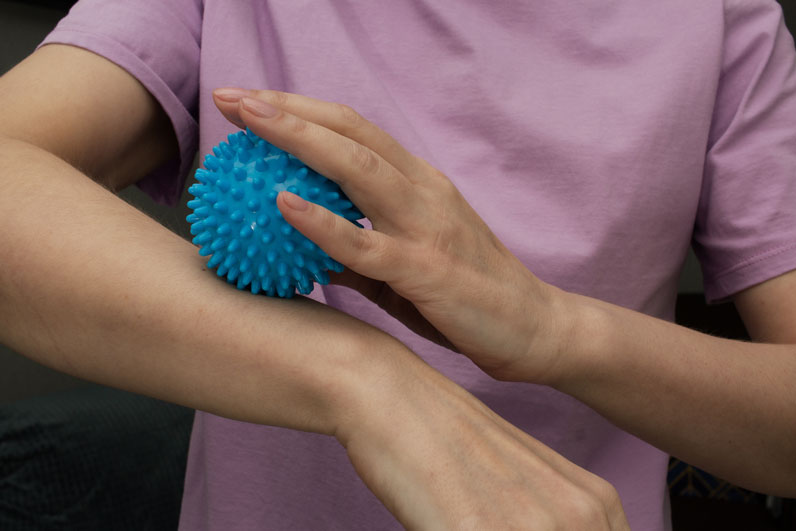
- Forearm roll/press: Use your opposite hand or a massage ball to slowly roll the inside and outside of your forearm. Pause and press into any tender points for three slow breaths.
- Finger extensions: Spread your fingers wide, then gently pull them back with the opposite hand (palms up and palms down). Hold each for 10–15 seconds.
Shoulder and Upper Back Reset
Time needed: 2 minutes
- Wall chest opener: Place one palm and forearm against a wall at shoulder height. Slowly turn your body away until you feel a gentle stretch through your chest and biceps. Hold 20–30 seconds each side.
- Scapular slides: Stand or sit tall, pull shoulder blades gently down and together, hold three seconds, release.
Back + Hip Release
Time needed: 2 minutes
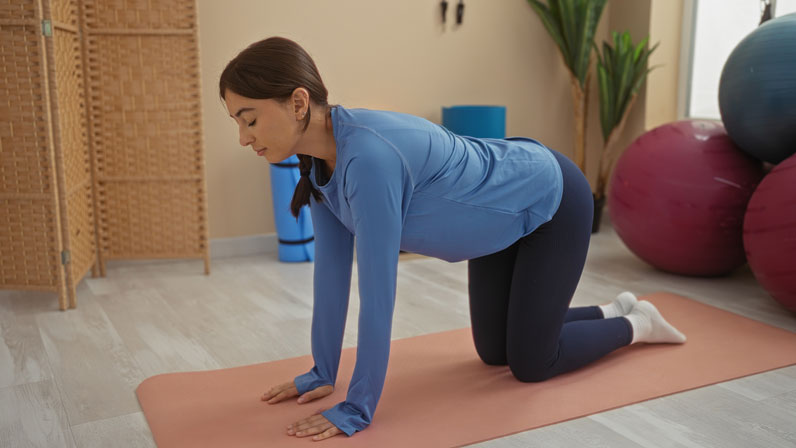
- Cat-cow (on hands and knees): Inhale, lift chest and tailbone; exhale, round spine and tuck chin.
Move slowly six to eight times.
- Seated forward fold: Sit with legs extended, hinge forward gently from your hips, relax your arms and head.
Breathe for 30–45 seconds.
End of Day One Minute Mind + Emotion Reset
- Mini gratitude pause: Place one hand over your heart, take a deep breath. Think of one client moment or personal strength you’re grateful for today. Say quietly: "Today’s work is done. I gave my best, and now I rest."
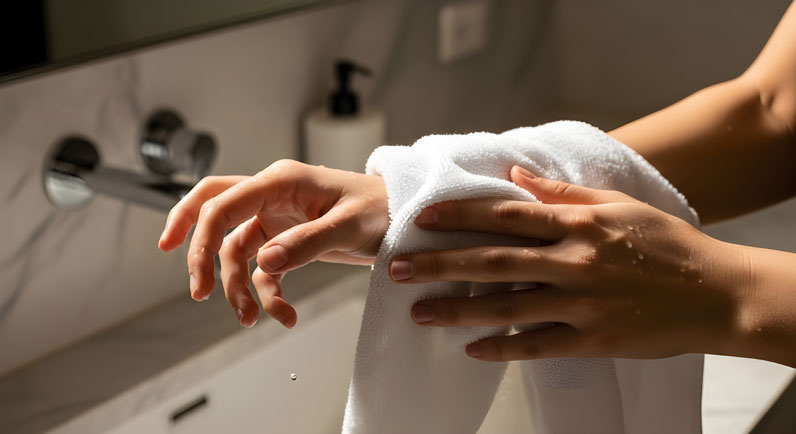
- Transition cue: Wash your hands slowly or stretch your fingers under warm water. Be intentional and imagine rinsing away other people’s energy. This symbolic gesture can be surprisingly powerful.
Deeper Closure at the End of Your Day
- Five-minute decompression walk or playlist: A short walk, gentle music or even stretching with dim lights helps signal closure to your workday.
- Journal your way to combatting compassion fatigue: Keep a short journal or voice memo at the end of each day.
Ask yourself:
* What went well today?
* What do I need to let go of?
* What’s one thing I’m grateful for?

Make sure your day ends with an activity that is just for joy: Read a favorite book, do yoga, call a friend or sit down with a blanket and a favorite cup of tea. Do whatever brings you joy that isn’t connected to productivity or something on your to-do list.
Tips to Keep Your Hands Healthy During the Winter Months
Gentle Cleansing (Each Time You Wash)
Why: Harsh soaps strip oils and compromise your skin barrier.
- Use a fragrance-free, creamy cleanser instead of foaming or antibacterial soaps.
- Use lukewarm water, not hot—hot water increases dryness.
- Pat dry with a soft towel (don’t rub). Leave a bit of moisture on your skin before applying lotion.
Moisturize Immediately (Every Wash + After Work)
Why: The key is sealing in moisture before it evaporates.
- Keep a small, non-greasy hand cream or balm near every sink and in your workspace. Look for: ceramides, shea butter, glycerin, dimethicone (creates a protective layer).
- Massage lotion into hands, paying extra attention to cuticles, knuckles and between fingers.
- Post-work ritual: Apply a thicker balm, then slip on cotton gloves for 10–15 minutes to help the product absorb deeply.
Protect During the Day
Why: Prevention is easier than repairing cracked skin.
- Wear gloves: Cotton liners under nitrile gloves when cleaning, laundering linens or using disinfectants. Don’t forget! Wear warm gloves or mittens outdoors to protect against the cold air that can rapidly wick moisture away.
- Apply barrier balm before starting massage: Apply a thin layer of a barrier cream before your first client, which can reduce irritation from frequent lotion use and washing throughout the day.
Weekly Deep Repair (1–2 times per week)
Why: Regular restoration keeps skin resilient all winter.
- Mini Hand Mask Treatment: Soak hands in warm water + a teaspoon of olive oil or coconut oil for 3–5 minutes. Exfoliate gently using a mix of sugar and honey (or a mild scrub). Rinse and pat dry. Apply a thick hand cream or balm. Wrap hands in a warm towel or wear cotton gloves for 10–15 minutes.