Continuing Education
Sports Massage
Earn up to 30 CE credits while learning essential sports massage skills with the AMTA Sports Massage CE Program.
Massage has been shown to help improve recovery and performance of world-class athletes.
February 1, 2026
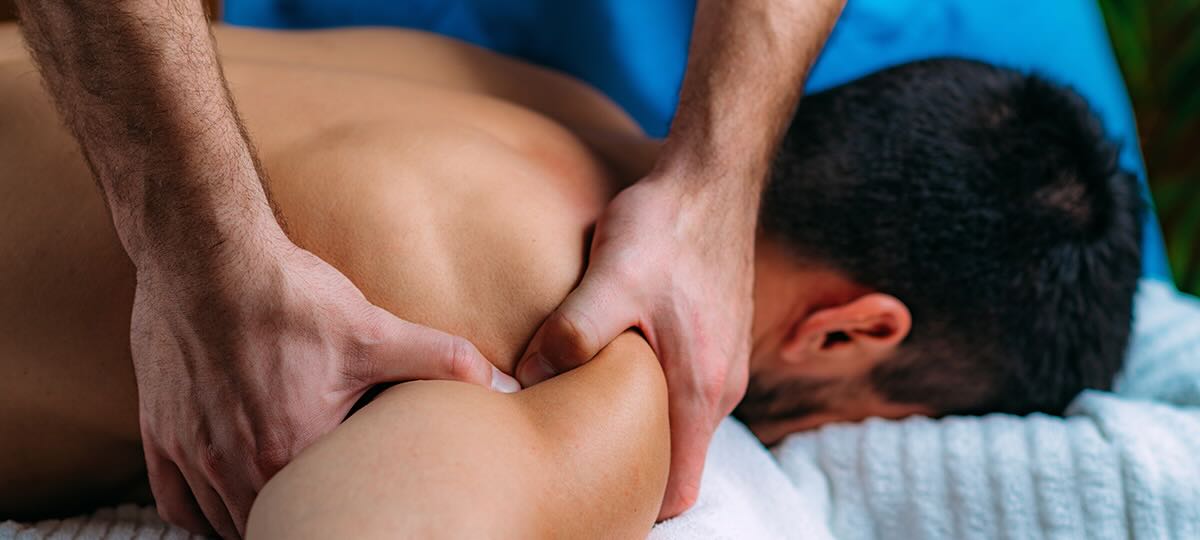
Every couple of years, the best athletes in the world gather to compete against each other in a variety of sports. This year, as the Winter Olympics swing into gear, athletes such as figure skaters, skiers, snowboarders and hockey players will all be going for gold in Italy.
The training and recovery regimens are the real story for most elite athletes who want to be in top condition for the relatively small amount of time they perform at the Olympics. Often, these regimens include massage therapy.
“Massage therapy has been used by our athletes as a modality for a long time,” says Robyn Hase, senior director of medical operations for the U.S. Ski and Snowboard team. “Research continues to help support the need and use for massage therapy.”
Jarrod C. Fritz, owner of Defined: Therapeutic Massage, agrees that massage therapy can play a crucial role in maintaining an athlete’s health. “I believe that all athletes require top-notch maintenance for recovery. Olympic athletes, particularly during the Olympics, require the utmost attention because it is do or die in a way,” he says. “They have a very short timeframe to do the absolute best against the absolute best in the world.”
For Matthew Gavzy, office manager and physical therapist assistant at Churchill Orthopedic Rehabilitation, an Olympic athlete’s connection to both their body and sport are an important part of the professional collaboration. “Olympic athletes are remarkably in tune with their bodies,” he explains. “They understand their strengths and weaknesses on mental, physical and emotional levels, and they can sense even the slightest break in form specific to their sport.”
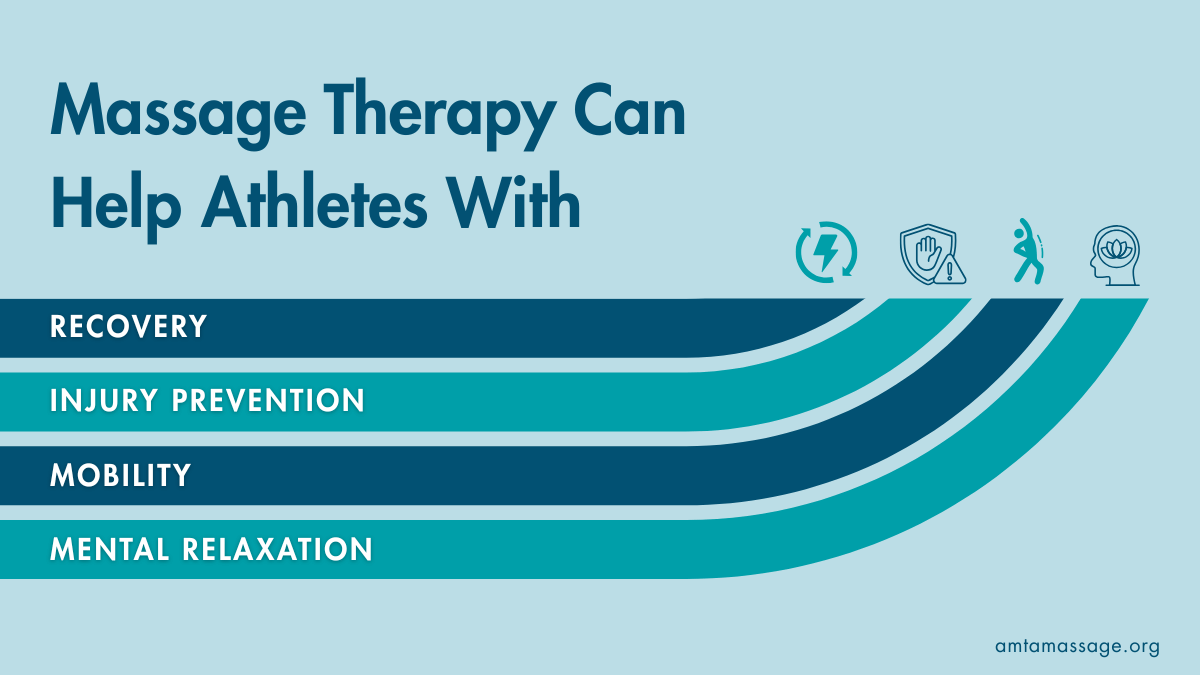
Massage therapy can help with more than just recovery, though. “Our athletes use massage for recovery, injury prevention, mobility and mental relaxation depending on the team and need of the individual athlete,” Hase says. For the U.S. Ski & Snowboard team, there are 244 individual athletes ranging in age from 15 to 43 years old, which means a wide range of techniques is often needed.
“We have a massage therapist who treats our athletes at the Center of Excellence and incorporates Muscle Activation Technique and movement into the treatment protocols for the athletes,” adds Hase. Additionally, the U.S. Ski & Snowboard team has a massage therapist who travels with the team, and their athletic trainers and physical therapists are also trained in massage techniques.
Massage therapy for athletes continues to be researched, with all signs pointing toward its benefits. As the Olympics continue, many of the athletes will likely turn toward massage to help recover from and prepare for their events.
A study1 explored the effect of massage therapy with lime essential oil on the recovery of delayed onset muscle soreness in athletes. The study took 30 male boxers, aged 20–22, and divided them into three groups.
An exercise (E) group was doing exercises and was not given massage therapy; the exercise massage (EM) group exercised and was then massaged with ordinary lotion as a topical oil; and the exercise massage with lime (EMC) group exercised and was given a massage with lime essential oil as the topical oil.
The study found that the lactic acid rose post exercise in the E group, decreased in the EM group, and decreased even further in the EMC group. The pain intensity scale followed this same pattern. After exercise, the E group rated pain on a pain intensity scale at a three. The EM group rated their pain at just under two, while the EMC group rated their pain just over one.
The study concluded that massage therapy both with a traditional topical oil and with lime essential oil can accelerate the DOMS recovery process as evidenced by the decrease in lactate levels and reduced pain after exercise.
A second study2 examined the effects of deep tissue massage therapy on muscle recovery and performance in athletes. The study used a randomized controlled trial design with 150 athletes between 18 and 45 years old.
Each athlete received a bi-weekly, 40-minute deep tissue massage for eight weeks. Performance improvement, muscle recovery and flexibility were measured with objective and subjective assessments.
The study found that team and strength athletes showed the greatest performance improvement compared to individual and endurance athletes. Bi-weekly massage sessions showed better recovery outcomes while longer massage sessions showed increased flexibility.
The study concluded “deep tissue massage therapy improves athletic performance and muscle recovery, especially for team and strength sports. With regular and continuous massage sessions, flexibility and recovery are improved among athletes.”
We asked two massage therapists who have worked with Olympic athletes to share with us one self-care tip from Olympic athletes they wished everyone would heed, and both gave the same answer: sleep.
“In all aspects, everything should be considered for your self-care,” Jarrod C. Fritz says. “But if I had to narrow it down to one specific thing, I would say sleep is the most essential. The body does know how to heal itself, and it needs rest to do so.”
Matthew Gavzy is of the same mind. “If I had to choose one factor that stands above the rest, it would be sleep,” he explains. “Olympic athletes prioritize getting sufficient, quality sleep every night because they understand its impact on performance and recovery. Sleep is when the body heals, the brain processes training, new neural pathways form, and existing ones are strengthened. It’s also when muscles fully recover and repair.”
Sports Massage
Earn up to 30 CE credits while learning essential sports massage skills with the AMTA Sports Massage CE Program.
Massage and Sports Injury Recovery
As part of an athlete’s care team, massage therapists can play an important role on the road to recovery.
1. Harahap NS, Manalu N, Siregar NS, Machrina Y. "Effect of Massage Therapy with Lime (Citrus Aurantifolia) Essential Oil on the Recovery of Delayed Onset of Muscle Soreness in Athletes." Med Arch. 2023 Feb;77(1):24-28.
2. Arsovski D. "Deep Tissue Massage Therapy: Effects on Muscle Recovery and Performance in Athletes." Int J Ther Massage Bodywork. 2025 Jun 12;18(2):40-51.