In today’s world, attempting to efficiently run a business without a proper, well-thought-out website puts both you and your business at a disadvantage. Websites act as a point of entry between a massage therapist and a potential client.
For many consumers exploring how massage therapy might fit into their health and well-being regimen, your practice’s website will be their first impression of both you and the massage profession, and first impressions matter.
“If a therapist doesn’t have a professional looking website, potential clients will pass them over,” says Rev. J. Maya Ravensong-Lawrence, CEO, Serenity Massage & Energywork.
The key word here is “professional.”
Anyone can sign into a web hosting platform and design a basic site around their content and call it a day, but websites only really work if they accurately and professionally showcase both you and your practice.
“Having your own website is vital for massage therapists,” says Mindy Totten, a business coach for bodywork therapists. “It reflects professionalism and is an ideal opportunity for ideal clients to see if your work could bring them the results they are seeking.”
Tips for Building an Effective Massage Therapist Website
Creating a professional website is not a one-size-fits-all approach. There are a few things all massage therapists should consider when building their websites to create a strong first impression that attracts clients, projects professionalism and highlights any relevant expertise.
Consider user interface and layout as it relates to all platforms. How a website looks on a desktop will be different from how a website looks on a tablet, which will be different from how a website looks on a smartphone.
Making sure the website is functional, easy to navigate and maintains its professional appearance across all three platforms is important. Many people do not consider how a website will look on a mobile device, when that is perhaps the platform that many, especially massage therapists, should consider most.
“A website needs to be a responsive design so it shows well on computer, tablet and especially a phone. Sites are accessed more often from a phone than a computer nowadays,” says Ravensong-Lawrence.
Consider this data from Statista, a global data and business intelligence platform focused on empowering people’s use of data: “In the second quarter of 2025, mobile devices (excluding tablets) accounted for 62.54% of global website traffic. Since consistently maintaining a share of around 50% beginning in 2017, mobile usage surpassed this threshold in 2020 and has demonstrated steady growth in its dominance of global web access.”
Looking at your website across all platforms during design is a must to ensure everything looks good and works well on a desktop and mobile devices. For example, if a client goes to book an appointment on their mobile device and can’t, many will move on instead of troubleshooting issues.
Optimizing the user experience is key to creating a place where potential clients want to come back for information. Testing your website to make sure it is functioning across all platforms will help find and fix any potential issues that could cost you clients.
Elements All Massage Therapy Websites Should Include
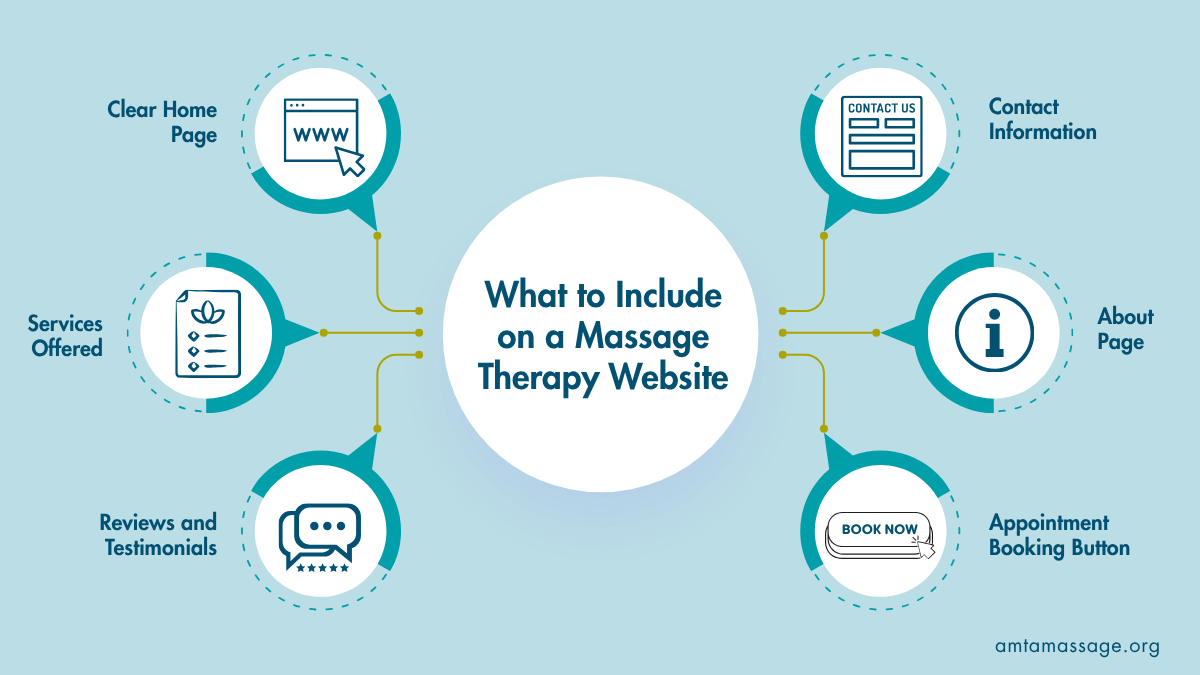
When building your website, consider what clients need to know about you and your practice and how that might inform your design:
- Clean, clear home page
- Testimonials and reviews
- Offerings/services page
- Appointment booking button
- About page
- Address/phone number/email
A clear home page with an easy way to book appointments is imperative. Clients should be given multiple opportunities to book appointments, so think about embedding a button for booking on multiple pages, including the homepage.
Be sure the button is visible, and don’t make visitors scroll. If anything is easy to find on your website, booking an appointment tops that list.
“Also key is your Offerings page, where ideally you’ll focus on no more than three services,” says Totten.
More services may be listed, though emphasizing a few offerings will help to showcase your expertise. Listing too many services can sometimes work against you by creating a “jack-of-all-trades, master of none” perception.
“An About page should be included where you share a little of your journey so that potential clients can see if you are a good fit to work together,” Totten adds. “Testimonials that focus on the results that the client received from your work should be included, as well.”
Tools to Help Massage Therapists Design and Create Their Websites
Creating a functional, aesthetically pleasing and professional website can be an intimidating task, especially for people who may not be tech savvy. Fortunately, many website builders today come with a variety of templates that make creating a website feel unique to your practice a little easier.
Additionally, tools such as Canva and Photoshop can help create and edit images for a site, while recent AI tools, such as ChatGPT, can help create clear, concise and professional copy. “Use AI to help you write the words if you don’t know what to say or how to say it,” Ravensong-Lawrence encourages.
A word of caution: remember, your website should still be a reflection not just of your business but also of you, the massage therapist. Make sure if you’re using a tool such as ChatGPT that the copy does not seem too sterile or impersonal.
AI is a starting point, not a finished product. Adding a little bit of your own voice, especially in an “About” section, can help create a positive, personal first impression that is engaging and showcases your strongest qualities.
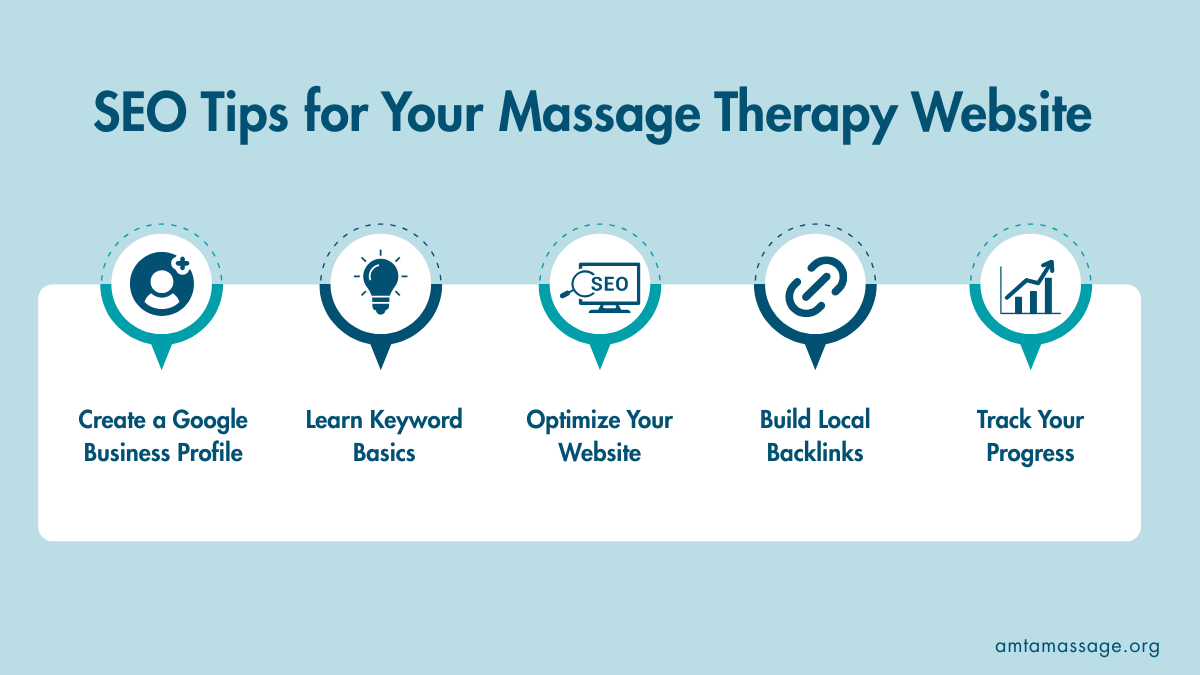
Search Engine Optimization (SEO) Considerations
SEO can be one of the more intimidating aspects of creating a website because of its sometimes complicated and seemingly always-changing nature. But, you don’t necessarily need to get in the weeds or be an expert to make your website SEO-friendly.
“SEO changes frequently, and with AI, the changes will likely happen even faster,” Totten says. “Rather than trying to game the search engines, as a bodyworker, you’ll benefit from updating your site regularly with information that your ideal clients are searching for. That way you are being of service to your community while also bumping your site up in search.”
What Should Not Be Included On a Massage Therapist Website?
There are a few things that are going to serve as warning to some consumers, so think carefully as you’re considering what to include. You don’t want visitors to feel like a real person isn’t behind the website.
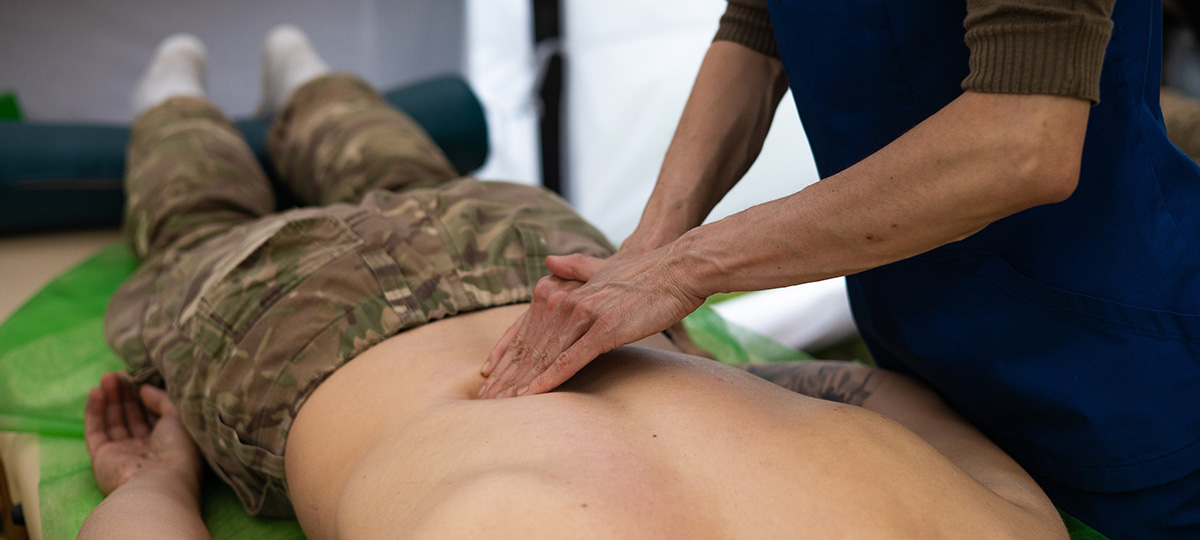
Ravensong-Lawrence shared some massage-specific precautions, like avoiding words like “happy,” “ending,” “tantric” and “goddess massage”; photos that show hot stones on a body without a protective sheet and towel between the body and the stones; photos that show the side of the breast; and photos that are more about a pretty photo than showing what the service actually is.
One common problem with stock photography, too, is that many are not being taken by massage therapists and often contain problematic features, like improper draping, clients and massage therapists with jewelry on, hair not properly pulled back or poor body mechanics. So, be sure you’re choosing photos carefully.