Continuing Education
National Convention
Engage with the massage community, expand your skills and explore the latest products.
AMTA’s 2026 National Convention Closing Keynote Speaker talks how letting go can push us forward, and the role being brave plays in taking the next big step into ourselves.
May 1, 2026
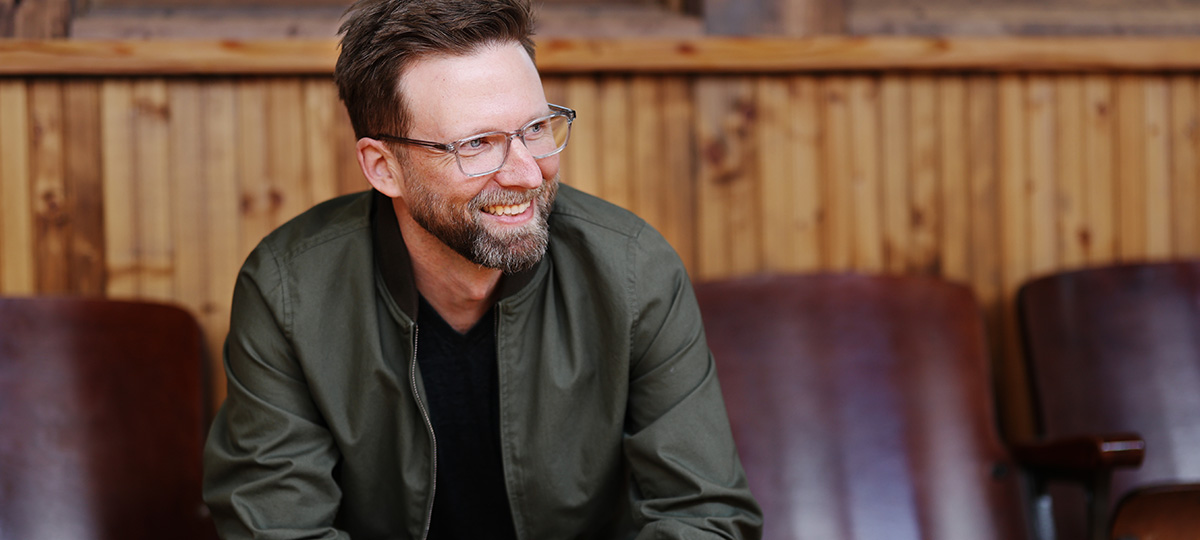
Shawn Ellis, known as the “Endings Expert,” came by that title via both singular moments and years of life experience. “Seven years ago I was in Los Angeles for an event. I took a morning walk to the beach, turned down an alley, and there in front of me—blocking my view of the ocean—was a large yellow sign. Three letters: END,” Ellis says. “And I remember standing there thinking: Looks like a beginning to me.”
But that’s not how he would have interpreted that sign some years earlier, when he was sitting in a courtroom filing for bankruptcy and navigating a divorce.
“That bankruptcy? Led to our best year ever. That marriage ending? Created space for real growth,” he remembers. “The things I finally let go of? Turned out to be exactly what was holding me back.”
Massage Therapy Journal had the chance to sit down with AMTA 2026 National Convention keynote speaker Shawn Ellis to talk about how to get more comfortable with discomfort, how to be brave and ways to protect against burnout.
You talk about being able to exist in some level of discomfort or uncomfortableness in order to realize long-term change/success. That’s really hard for most people. What would you say to someone who feels unsure they can do that work?
Ellis: First, I’d say: you already have.
Think about the hardest thing you’ve ever navigated. The moment you thought you couldn’t get through. You got through it. You’re here. That’s not nothing — that’s evidence.
The problem is we don’t collect that evidence. We don’t keep track of the hard things we’ve already done. So when the next hard thing shows up, we face it without any proof that we’re capable. And fear fills that gap.
One of the tools I teach is something I call a Faith File—a running record of the moments you’ve already survived, already grown through, already chosen the harder right thing over the easier wrong one. When doubt shows up, you go to the file. You don’t need motivation. You need evidence.
The second thing I’d say is this: you don’t have to leap. You have to choose. One brave choice at a time. Not one dramatic moment of transformation—five quiet ones. That’s actually how change works. Small, intentional choices made consistently over time.
Discomfort doesn’t have to be dramatic to count. Sometimes it just looks like saying the thing you’ve been avoiding. Or ending something that’s no longer working. Or asking for help when you’d rather disappear.
You can do that. Most of us already have.
Massage therapists are often people who enjoy taking care of other people, meaning they can deplete their own resilience and health and well-being. Can you name one small practice they can implement that will help protect against burnout?
Ellis: Box breathing. It’s simple, no one has to know you’re doing it, and the science behind it is real.
If you haven’t done it before, here’s how it works: inhale for four counts, hold for four, exhale for four, hold for four. That’s one cycle. Do four cycles. It takes about 90 seconds.
What’s actually happening when you do that is your nervous system is shifting out of fight-or-flight and into a regulated state. Your prefrontal cortex—the part of your brain responsible for clear thinking, perspective, good judgment—comes back online. You go from reactive to responsive.
For someone in a helping profession, whose whole day is about attunement to other people’s needs, that 90-second reset is not a luxury. It’s maintenance.
The problem with anything that’s so easy to do is that it’s just as easy to not do.
I’d suggest using it as a transition ritual. Before your first client. Between clients. Before a hard conversation. The goal isn’t to eliminate stress—stress is part of a life that matters. The goal is to make sure you’re not carrying the last moment into the next one.
You can’t pour from a depleted state. The most sustainable givers I know have learned to protect their own capacity—not as selfishness, but as responsibility.
For someone in a helping profession, whose whole day is about attunement to other people’s needs, that 90-second reset is not a luxury. It’s maintenance.
Seeing endings as beginnings is so subtle but so powerful. So many people imagine endings as bad. What’s one of the first steps to helping a person loosen their grip on where they are now so they can make that leap to where they want to be or need to be?
Ellis: I ask them one question: What is this costing you?
Not in a dramatic way. Just honestly. What is holding on to this—this situation, this habit, this version of things—actually costing you? In terms of energy? Time? Options? The version of yourself you’re capable of becoming?
We’re really good at calculating the cost of letting go. We feel that immediately. What we’re not good at is calculating the cost of staying. Because the cost of staying is often invisible—it accumulates slowly, quietly, until one day you look up and realize how long you’ve been carrying something that stopped serving you years ago.
The second step is what I call looking at the pattern. Think about the last time something ended in your life—a job, a relationship, a way of working—that felt devastating in the moment. Where did it lead? What opened up afterward?
For most people, if they’re honest, the answer is: something better.
If you see that many of your past breakthroughs came on the other side of an ending, that’s not a coincidence. It’s a pattern. And if your past breakthroughs came on the other side of an ending ... doesn’t it stand to reason that your next breakthrough is sitting there too?
That’s not a leap of faith. That’s reading your own evidence.
“One brave choice at a time”—bravery is a sometimes loaded word, but doesn’t need to always be big actions. Bravery can be quiet, too. For those who might not consider themselves to be brave, how can they change their mindset?
Ellis: Stop waiting to feel brave before you act. Bravery isn’t a feeling — it’s a decision.
I spent a lot of my life living scared. I still get scared. But now what I know is, so does everyone else. Even if it looks like they’re not. They just decided to move anyway.
Here’s the reframe I’ve learned: fear is not a stop sign. Fear is a signal. It shows up when you’re ending something that’s not working. When you’re starting something that matters. When you’re stepping into something you care about. That’s not a red light — that’s a green light with butterflies.
So if you’re waiting to feel ready, you’ll wait a long time. What you’re actually looking for isn’t the absence of fear. It’s the decision to move toward something important in spite of it.
And as you said, brave doesn’t have to be big. It can be one conversation you’ve been postponing. One decision you’ve been circling. One small thing you do differently today. That’s it. That’s the brave choice.
You don’t choose your ending in one dramatic moment. You choose it in five quiet ones.
Stop waiting to feel brave before you act. Bravery isn’t a feeling — it’s a decision.
What is one thing you’re hoping attendees will take away from your closing keynote?
Ellis: That default is not destiny.
Most of us don’t choose our endings—we just drift toward them. We keep doing what we’ve always done because change is uncomfortable and the familiar feels safer, even when it’s not working.
What I want every person in that room to leave with is this: you have more power than you think. Not over everything—not over the disruptions, the surprises, the endings that come at you without warning. But over how you respond. Over what you choose to end. Over the next brave choice.
And I want them to know they don’t have to do it alone. Community is one of the five choices that masters of Radical Adaptability make—and that’s not incidental. The ending is shaped by the moments. The moments are shaped by the choices. And the choices are easier when you’re not making them by yourself.
If someone walks out of that room and makes one intentional choice they wouldn’t have made otherwise—one thing they’re willing to end, one new beginning they’re willing to step into—that’s the whole talk right there.
National Convention
Engage with the massage community, expand your skills and explore the latest products.
Continuing Education Overview
AMTA offers the highest quality massage therapy continuing education classes and training, available online and in-person.