Advocacy 101
Discover what advocacy is and why it is important.
New to advocacy? AMTA provides accessible tools and education—like our ABCs of Advocacy Grassroots Training—to help members understand:
- How advocacy works
It involves a range of activities, from raising awareness and educating the public to influencing lawmakers and shaping policy outcomes. - Why it's essential to the profession
Advocacy protects your right to practice, advances the reputation of massage therapy, and ensures fair, consistent standards across the country. - How everyone can contribute to meaningful change
Whether through grassroots efforts or personal engagement with policymakers, small actions—like sending an email, attending a town hall, or sharing your story—can help move the profession forward.
The Importance of Advocacy
Advocacy involves actively supporting a cause, idea, or policy. In massage therapy, it means protecting the profession’s scope of practice, raising awareness about its benefits, and ensuring that laws reflect the profession’s value and expertise.
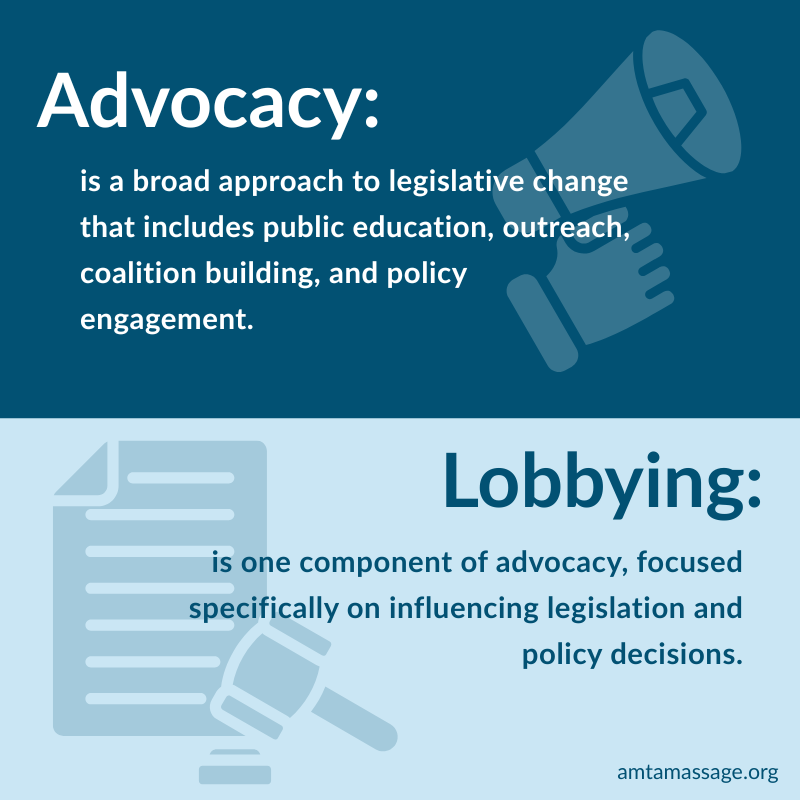
Lobbying is a specific kind of advocacy that focuses on legislative change. Understanding the nuances of advocacy is important so that your support for the profession is informed.
The Importance of Advocacy
Advocacy involves actively supporting a cause, idea, or policy. In massage therapy, it means protecting the profession’s scope of practice, raising awareness about its benefits, and ensuring that laws reflect the profession’s value and expertise.
Lobbying is a specific kind of advocacy that focuses on legislative change. Understanding the nuances of advocacy is important so that your support for the profession is informed.
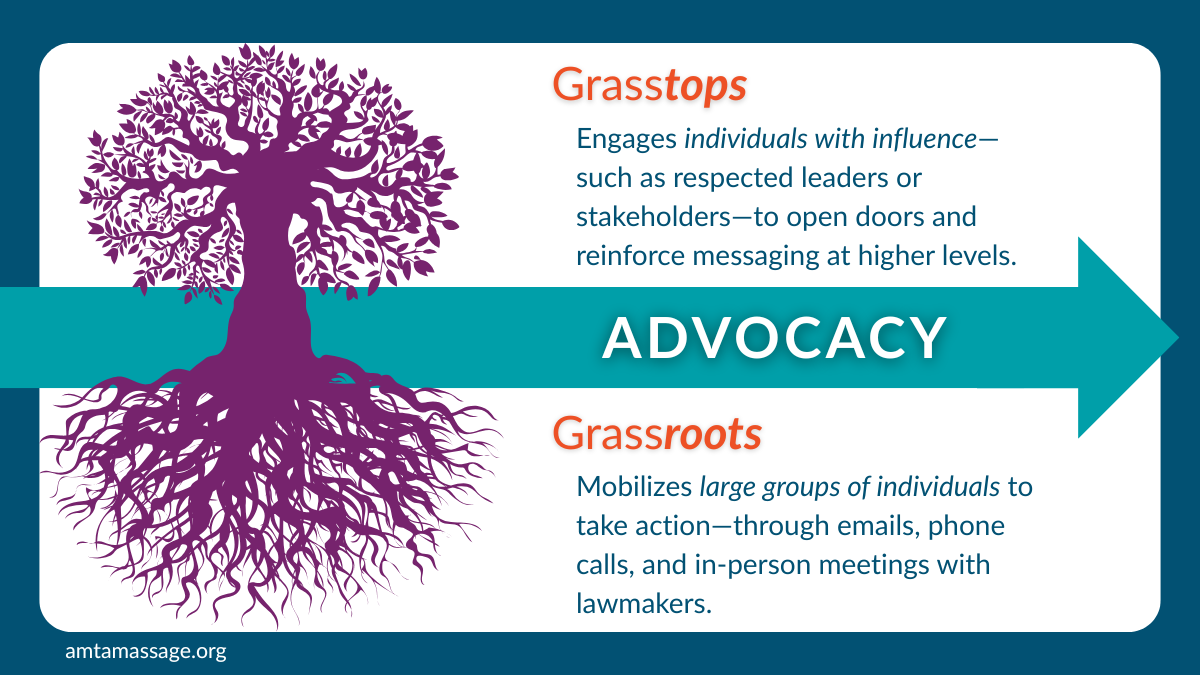
Grassroots vs Grasstops
Both are essential to successful advocacy strategies, but they have important differences.